Campaign to Restore Gunnersbury’s Historic Stables
Years of neglect have turned Grade II listed building into ‘ugly eyesore’
A campaign to restore the historic Gunnersbury Stables has been launched by local resident and architect Bill Hardman.
Living close to Gunnersbury Park and jogging through it, he has for years been dismayed at the state of the buildings and felt something needed to be done before they become beyond repair. He believes it wouldn't take much to prevent that happening.
"The best way to renovate the building is simply to occupy it," Bill told EalingToday. Of course further structural work would be necessary, but occupying the buildings in the first instance would prevent further decline, says Bill.
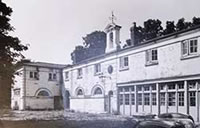
Hidden for many years, it is hard to visualise the once beautiful architecture that lies beneath the scaffolding we now see.
“These important buildings appear to be an ugly eyesore rather than a beautiful asset. In fact deterioration is continuing even though the stables are Grade II listed buildings that the local authority is required to protect. They were designed by the Victorian Neo-Classical Architect Sidney Smirke (1796-1864) who was also responsible for the round reading room at the British Museum.
 “Historic buildings like these are a precious and finite asset, and powerful reminders to us of the work and way of life of earlier generations. The richness of this country’s architectural heritage plays an influential part in our sense of national and regional identity. These stables have been listed for many years and as Grade II* means that are particularly important buildings of more than special interest. Only four per cent of listed buildings are considered of this level of importance.
But that's not the only issue. Bill considers the scaffolding and the now wasteland surrounding it to be a health and safety issue.
English Heritage told Bill that Ealing and Hounslow Council, who jointly own the park and all buildings within it, have a legal obligation to protect the buildings from further deterioration. And a spokesperson for the Government's statutory adviser on the historic environment has confirmed to EalingToday that they have been in talks with the councils about all the park buildings.
"We are delighted to hear of this petition," said the spokesperson. "We are talking to both the councils about this worrying situation and the stables are our primary concern." She stated that English Heritage are 'content' that the councils are taking steps to meet their legal obligation.
Despite this reassurance, Bill and other Gunnersbury Park supporters are not convinced, with good historical reason. “Over the last 20 plus years more than 33 proposals for the buildings have been considered and 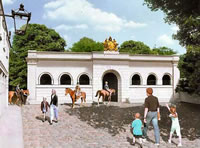 rejected by the authorities. During this period they have continued to deteriorate," he said.
He has launched an online petition and is encouraging interested parties to register their support for the restoration project. Bill's vision is that the stables be reinstated. Not only would this solution see the buildings reoccupied, restored and maintained - it would bring riding back to the area, now that Ealing Common doesn't provide the facility. "Think about sport and the Olympics - riding would be a fantastic asset to our area," he said.
To register your support for the campaign or for more information about the history, past and possible future of the stables see www.gunnersburystables.com
English Heritage Statement to EalingToday English Heritage continues to be involved in the drafting of the Conservation Management Plan for Gunnersbury Park. We are working with both Ealing and Hounslow Councils on the plan and think that it will offer a real opportunity to find a future for the park and its listed buildings. We understand that there will be public consultation on the plan and its proposals in due course. We acknowledge that some of the listed buildings are in a poor state of repair, reflected by the number of entries in our ‘Buildings at Risk’ register. English Heritage takes this very seriously and will continue to press for solutions for these buildings. The important point to remember is that a sustainable future for the park and its listed buildings is being sought through the Conservation Management Plan and that anyone with an interest in its future can become involved through the public consultation. |
January 17, 2008
Related links
|
